Product Factsheet &
TECHNICAL SPECIFICATIONS (SEAMLESS ACOUSTIC PLASTER)
Ground Vibration Absorber / Vibration Isolation Pads
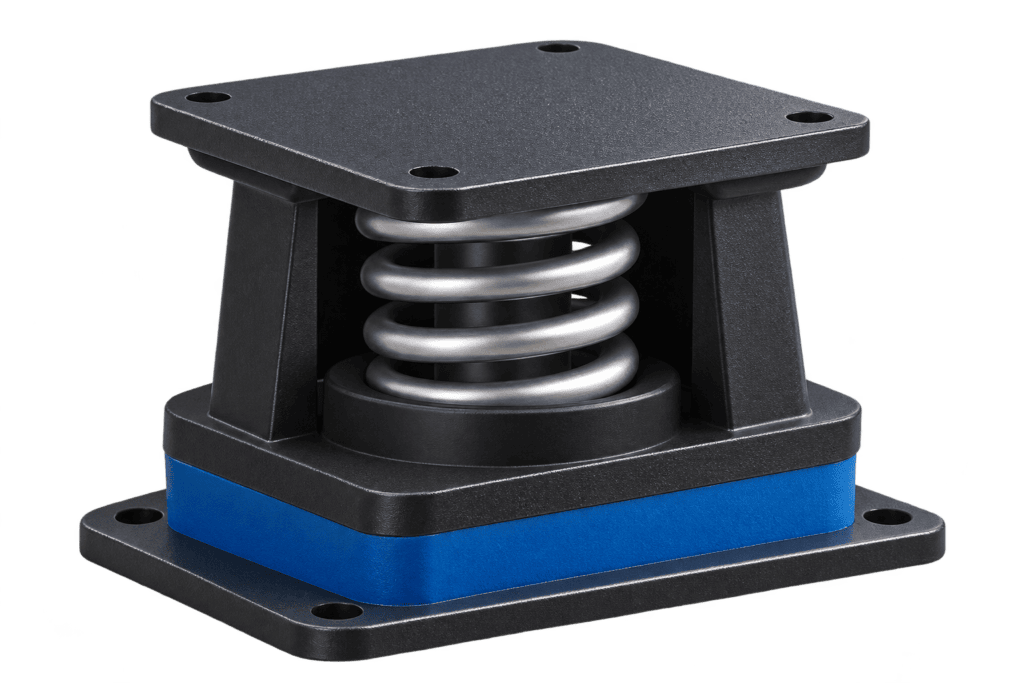
Short-Travel Metal Damping Spring + High-Polymer Vibration-Damping Rubber Block
Floating Floor / Vibration Isolation Assembly
Square Isolation Pad / Customized
Frequency Absorption Focus
Low-Frequency Vibration & Impact Sound
Vibration Isolation, Impact Noise Reduction & Structural Decoupling
HOW THE VIBRATION ISOLATION PADS
WORKS
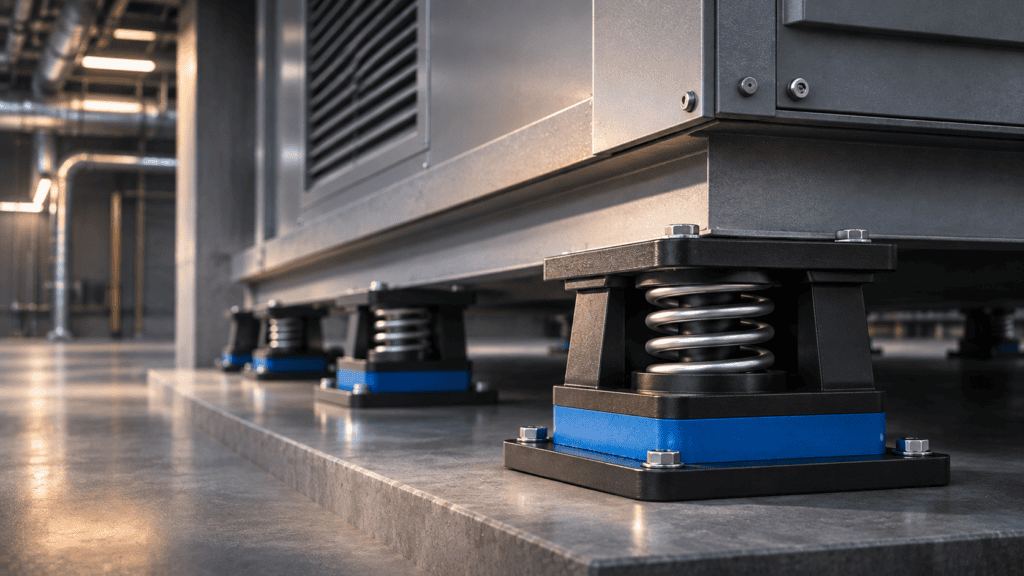
Vibration Isolation Pads work by introducing a resilient mechanical interface between a structure or floating floor assembly and the original building base. This interrupts the direct path through which vibration can travel through the structure.
- Interrupts Vibration Transmission: The resilient isolation assembly separates the floating construction from the original structural base, reducing the direct transfer of vibration.
- Controls Low-Frequency Vibration: The combined metal spring and high-polymer damping rubber construction is designed to address vibration over a broad range, including low-frequency vibration.
- Reduces Impact Sound: By isolating the floor assembly from the base structure, the system can improve impact sound insulation and reduce vibration radiation into the building structure.
Direct Answer:
SOUND INSULATION & VIBRATION ISOLATION
Unlike conventional acoustic panels that primarily absorb reflected sound inside a room, vibration isolation pads work at the structural transmission path. They are particularly relevant when noise is generated through impact, machinery, equipment, or other sources that can transmit vibration directly into the building structure.
ACOUSTIEG’s Ground Vibration Absorber combines a short-travel metal damping spring with a high-polymer vibration-damping rubber block. According to the published company profile, the system can be used when constructing floating floors to cut off the vibration radiation layer from the original base layer and improve low-frequency vibration and impact sound insulation.
VS. SOUNDPROOFING
Sound absorption and vibration isolation address different acoustic problems.
Acoustic panels are installed on walls or ceilings to absorb reflected sound and reduce reverberation inside a space. Vibration Isolation Pads, on the other hand, are installed within the structural assembly to interrupt the physical path through which vibration and impact energy travel.
For this reason, vibration isolation should not be treated as a replacement for room acoustic treatment. In demanding projects, isolation components can be combined with floating floors, resilient wall or ceiling systems, acoustic absorption, and other noise-control measures as part of a complete acoustic strategy.
Targeted
COMMERCIAL APPLICATIONS
● Corporate Workspaces: Floating floors and isolated structural assemblies in offices, meeting areas, and technical spaces where impact and structure-borne noise require control.
● Auditoriums & Educational Venues: Music studios, performance spaces, classrooms, lecture facilities, and other environments where low-frequency vibration and impact noise can affect acoustic performance.
● Hospitality & Leisure: Bars, KTV rooms, gyms, entertainment venues, and hospitality environments where vibration can travel through floors and structural elements.
● Acoustic Suites: Recording studios, home theaters, broadcast facilities, and other acoustically sensitive spaces requiring structural vibration isolation.
Frequently Asked Questions
FAQ
What are Vibration Isolation Pads used for?
They are used to reduce the transmission of vibration and impact noise between a floating floor or equipment assembly and the building structure.
Are Vibration Isolation Pads the same as acoustic panels?
No. Acoustic panels primarily absorb reflected sound within a room, while vibration isolation pads interrupt structure-borne vibration and impact transmission through the building structure.
What are the published specifications for the ACOUSTIEG Ground Vibration Absorber?
The published ACOUSTIEG company profile describes a short-travel metal damping spring combined with a high-polymer vibration-damping rubber block. The listed common size is W 100 × L 100 × T 95 mm, with applications including bars, KTV rooms, and music studios.
Turn Better Acoustics Into
BETTER SPACES WITH ACOUSTIEG
Effective acoustic isolation begins with controlling vibration at the structural transmission path. Vibration Isolation Pads provide a practical component for floating-floor and structural isolation assemblies, helping reduce low-frequency vibration and impact noise while supporting a more controlled acoustic environment.
Explore Vibration Isolation Pads • Request Engineering Consultation • acoustieg.com