The Role of

ACOUSTICS IN MODERN BUILDING DESIGN

Article

DESCRIPTION

In modern building design, success is no longer defined by visual appeal alone. How a building sounds is just as important as how it looks. Acoustics have become a fundamental design discipline that directly affects comfort, functionality, user experience, and long-term building performance.

This article explains the role of acoustics in modern building design and why acoustic planning is now essential in contemporary architecture, highlighting the professional approach of ACOUSTIEG in delivering engineered acoustic solutions for modern buildings.

What Are

ACOUSTICS IN BUILDING DESIGN?

Building acoustics focus on controlling how sound behaves within a structure. This includes:

  • How sound travels through spaces

  • How it reflects off surfaces

  • How it is absorbed or reduced

  • How it transfers between rooms


Acoustics are not limited to noise reduction. They are about creating balanced sound environments that support the intended function of each space.

Why Acoustics are

CRITICAL IN MODERN BUILDINGS

Modern architectural trends have introduced new acoustic challenges, such as:

  • Open-plan layouts

  • Extensive use of glass, concrete, and hard surfaces

  • Higher ceilings and larger volumes

  • Mixed-use buildings with diverse activities

Without proper acoustic design, these features can lead to:

  • Excessive reverberation

  • Poor speech intelligibility

  • Noise distractions

  • Reduced comfort and productivity


Well-designed acoustics ensure that modern buildings perform as intended—not just visually, but functionally.

The Impact of

ACOUSTICS ON BUILDING PERFORMANCE

Acoustics influence how people experience and use a building:
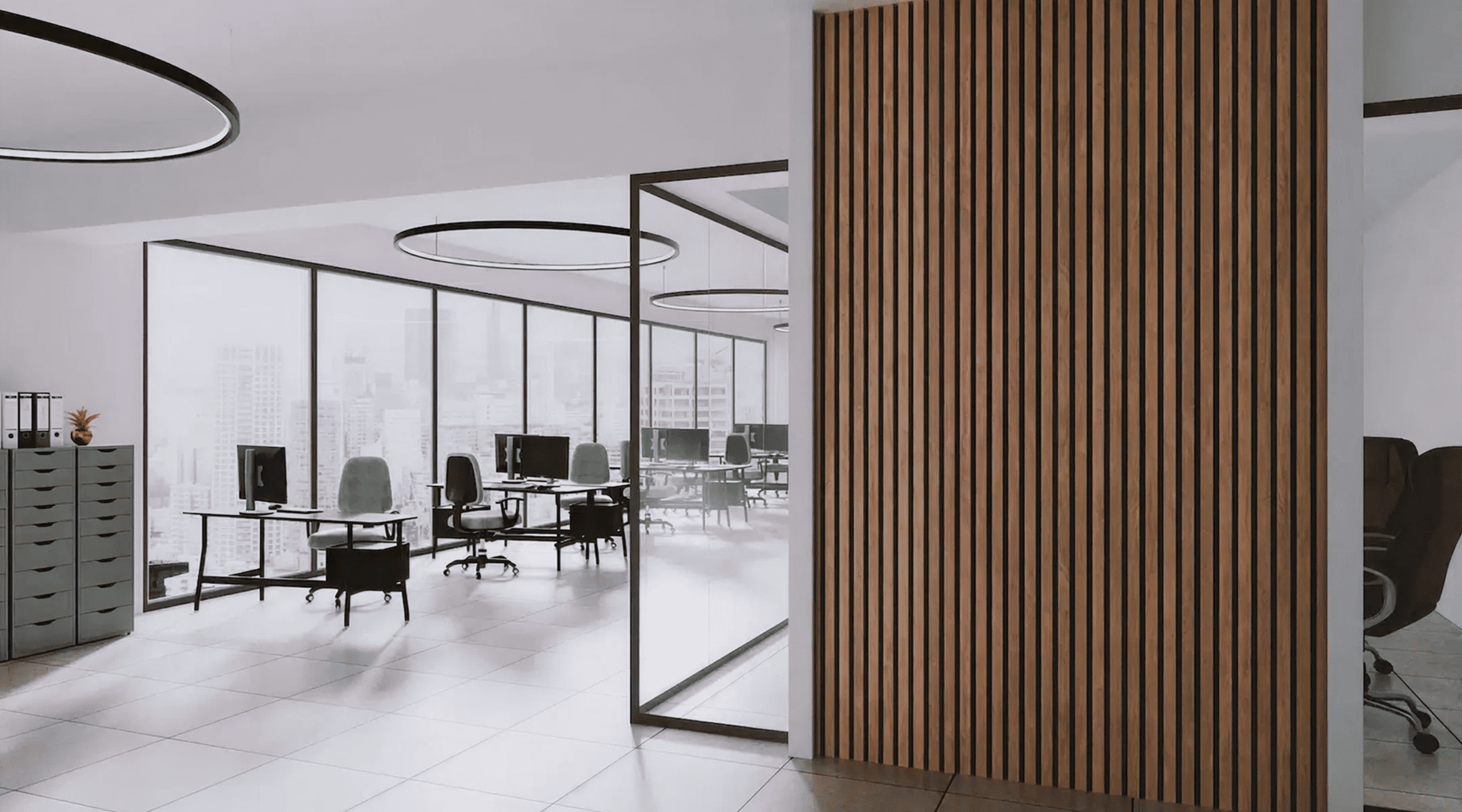
  • Offices: improved focus, privacy, and communication
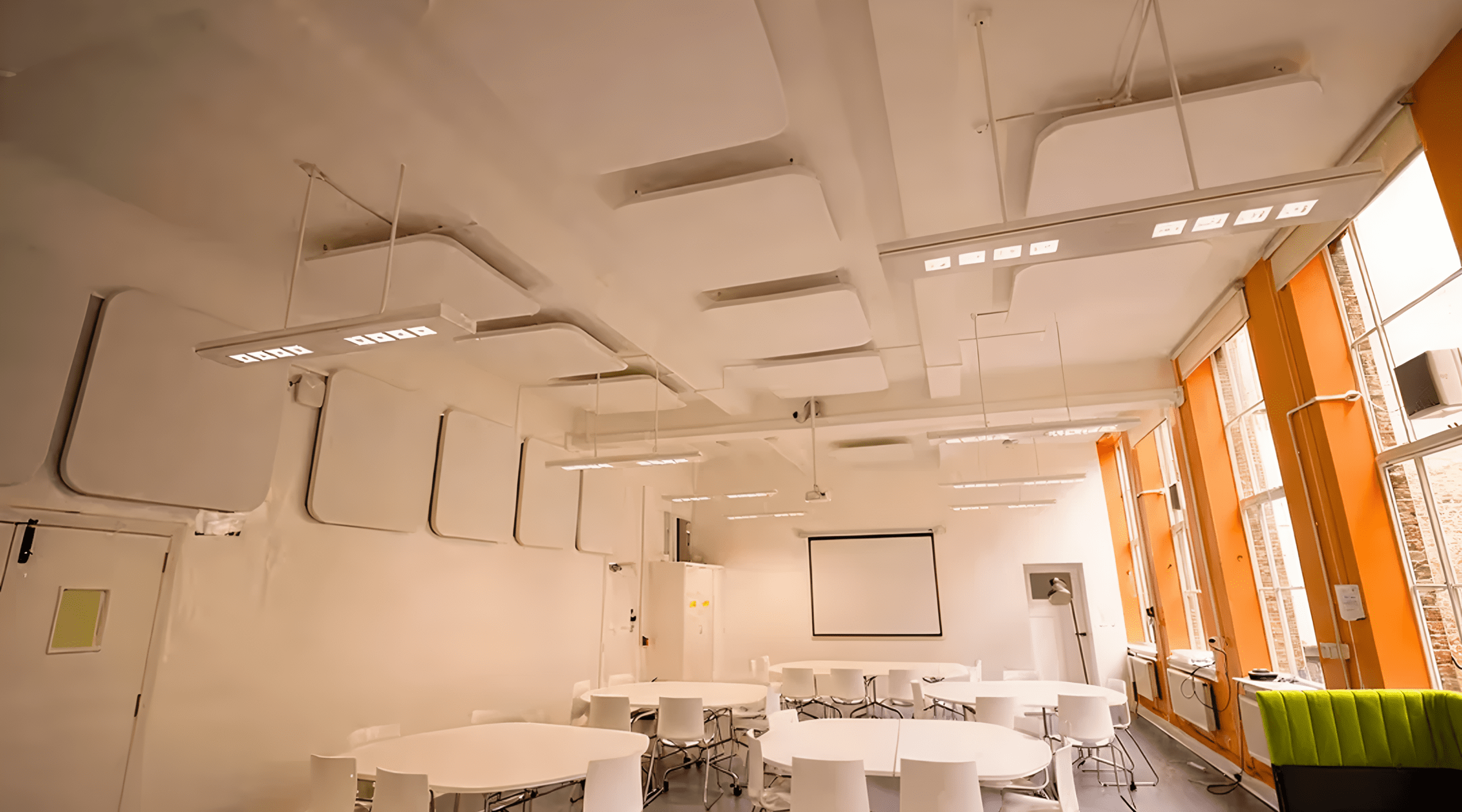
  • Educational buildings: clearer speech and better learning environments
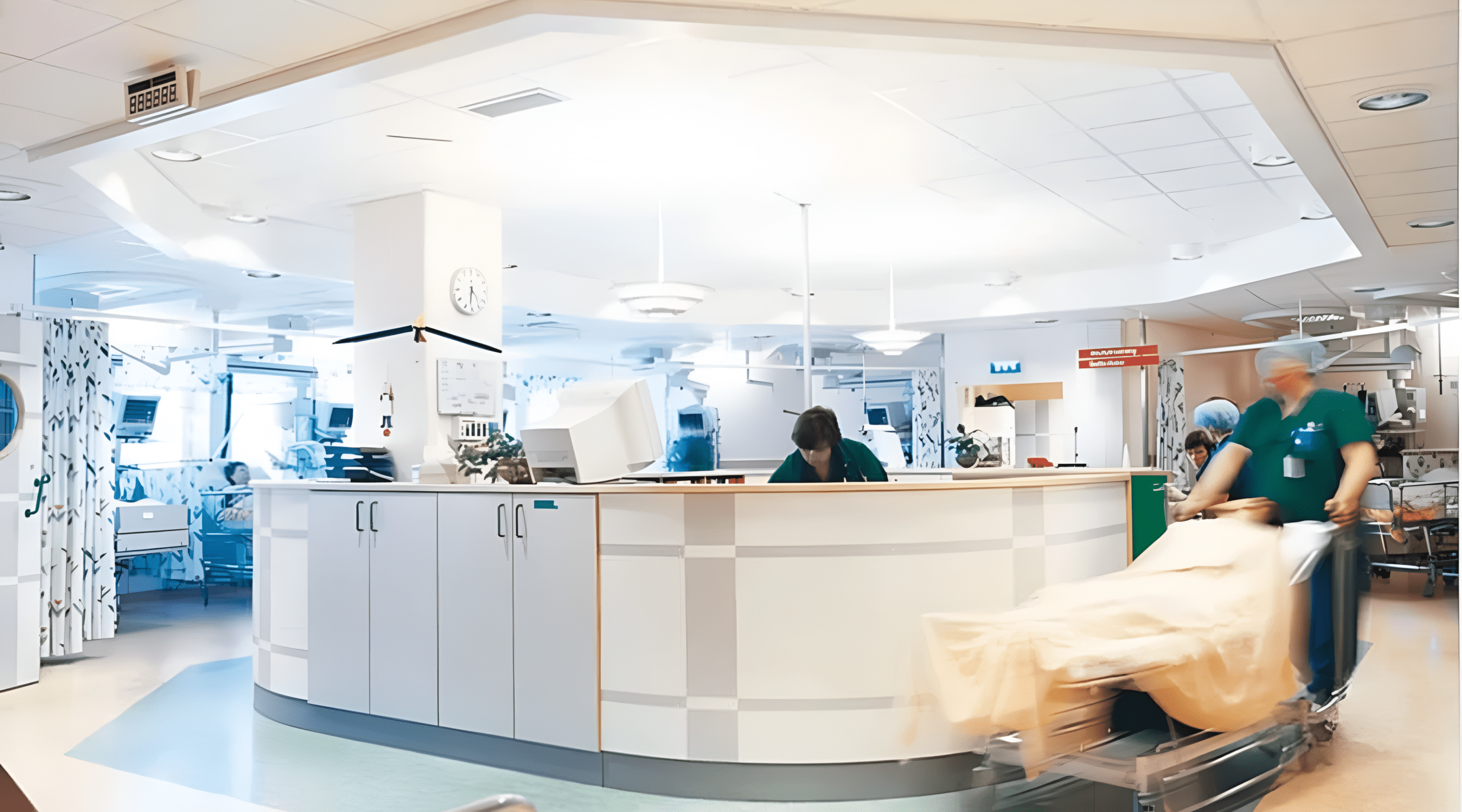
  • Healthcare facilities: reduced stress and improved patient comfort
  • Hotels: quieter rooms and higher guest satisfaction
  • Commercial spaces: better user flow and enhanced customer experience

Each building type requires a tailored acoustic strategy aligned with its purpose.

Integrating Acoustics

INTO ARCHITECTURAL DESIGN

In contemporary projects, acoustics are no longer added after construction. Instead, they are:
  • Integrated into wall, ceiling, and partition systems
  • Designed to align with architectural aesthetics
  • Selected to balance visual identity with acoustic performance

The most effective acoustic solutions are often visually subtle but technically precise.

Key Acoustic

PERFORMANCE CRITERIA

Professional acoustic design relies on measurable engineering standards, including:
  • RT60 (Reverberation Time): controls echo and speech clarity
  • NRC (Noise Reduction Coefficient): measures sound absorption
  • STC (Sound Transmission Class): evaluates sound isolation
  • Acoustic simulations during the design phase
  • Post-installation testing and verification

These metrics ensure that acoustic solutions deliver predictable and verifiable results.

The Importance of

EARLY ACOUSTIC PLANNING

One of the most common design mistakes is treating acoustics as a late-stage consideration. Early planning allows:

  • Better integration with architectural concepts

  • Greater flexibility in material selection

  • Reduced corrective costs

  • Higher overall acoustic performance


Acoustic design is most effective when developed in parallel with architectural and spatial planning.

The Role of ACOUSTIEG

IN MODERN BUILDING PROJECTS

ACOUSTIEG approaches acoustics as an integral part of modern building design. Its methodology includes:

  • Acoustic analysis based on building function and usage

  • Design solutions aligned with architectural intent

  • Performance-driven material selection

  • Precise execution and quality control

  • Acoustic testing to validate results


ACOUSTIEG treats acoustics as a design discipline that enhances both building performance and user experience.

CONCLUSION

Acoustics play a decisive role in modern building design. They influence comfort, functionality, and how spaces are perceived and used on a daily basis. Buildings that ignore acoustics often face long-term operational and experiential challenges.

When acoustics are planned scientifically and integrated from the early design stages, buildings become more efficient, comfortable, and sustainable. With the expertise of ACOUSTIEG, acoustics evolve from a technical requirement into a strategic asset that elevates modern architecture.

NEXT

Articles

This article explores building acoustics, the key standards that govern them, the most common challenges in real projects, and best practices for achieving reliable acoustic performance.
This article explains the role of acoustic solutions in healthcare environments and best practices for achieving a balance between regulatory compliance and acoustic comfort.
This article explores the importance of acoustic solutions for educational buildings and universities and compliant acoustic performance-highlighting the approach adopted by ACOUSTIEG.

All rights reserved to ACOUSTIEG © 2025

LOG IN TO
YOUR ACCOUNT

LOG IN

TO YOUR ACCOUNT

Access your dashboard, manage your projects, and explore our full services

Don’t have an account? Sign up