Architectural Acoustics Explained:

FROM DESIGN TO INSTALLATION

Article

DESCRIPTION

In modern architectural projects, acoustics are no longer treated as a secondary technical detail. They are a core component of spatial quality, functionality, and user experience. A space can be visually striking, but without proper acoustic design, it may fail to perform as intended.

This article explains architectural acoustics, outlines the full process from early design to final installation, and highlights how ACOUSTIEG applies architectural acoustics professionally across commercial projects in Saudi Arabia.

What Is

ARCHITECTURAL ACOUSTICS?

Architectural acoustics is the science and practice of controlling sound within built environments. It focuses on how sound behaves in relation to:

  • Space geometry

  • Surface materials

  • Occupancy and usage

  • Architectural form


Unlike basic soundproofing, architectural acoustics addresses both sound isolation and sound quality, ensuring spaces are comfortable, functional, and purpose-driven.

Why Architectural Acoustics Is

ESSENTIAL IN MODERN DESIGN

When acoustics are overlooked, projects often face:
  • Excessive reverberation and echo
  • Poor speech intelligibility
  • Acoustic discomfort for occupants
  • Costly corrective work after completion

When architectural acoustics are integrated early, projects achieve:
  • Improved space performance
  • Higher user comfort and satisfaction
  • Better alignment between design and function
  • Long-term operational efficiency

Acoustics directly influence how a space works, not just how it looks.

The Architectural Acoustics Process:

FROM DESIGN TO INSTALLATION

No 1

Acoustic Analysis and Assessment

Every successful acoustic strategy starts with analysis, including:

single product icon

Understanding how the space will be used

single product icon

Evaluating background noise and surroundings

single product icon

Identifying privacy and clarity requirements

single product icon

Studying room volume, dimensions, and layouts

This phase defines the technical foundation of the entire acoustic design.

No 2

Acoustic Design and Planning

During the design stage, acoustic specialists:

single product icon

Define target reverberation times (RT60)

single product icon

Select appropriate acoustic treatments

single product icon

Integrate acoustic elements with architectural concepts

single product icon

Balance performance requirements with aesthetics

Well-designed architectural acoustics enhance the space without compromising visual identity.

No 3

Selection of Acoustic Materials

Material selection is based on performance, durability, and design intent. Common solutions include:

single product icon

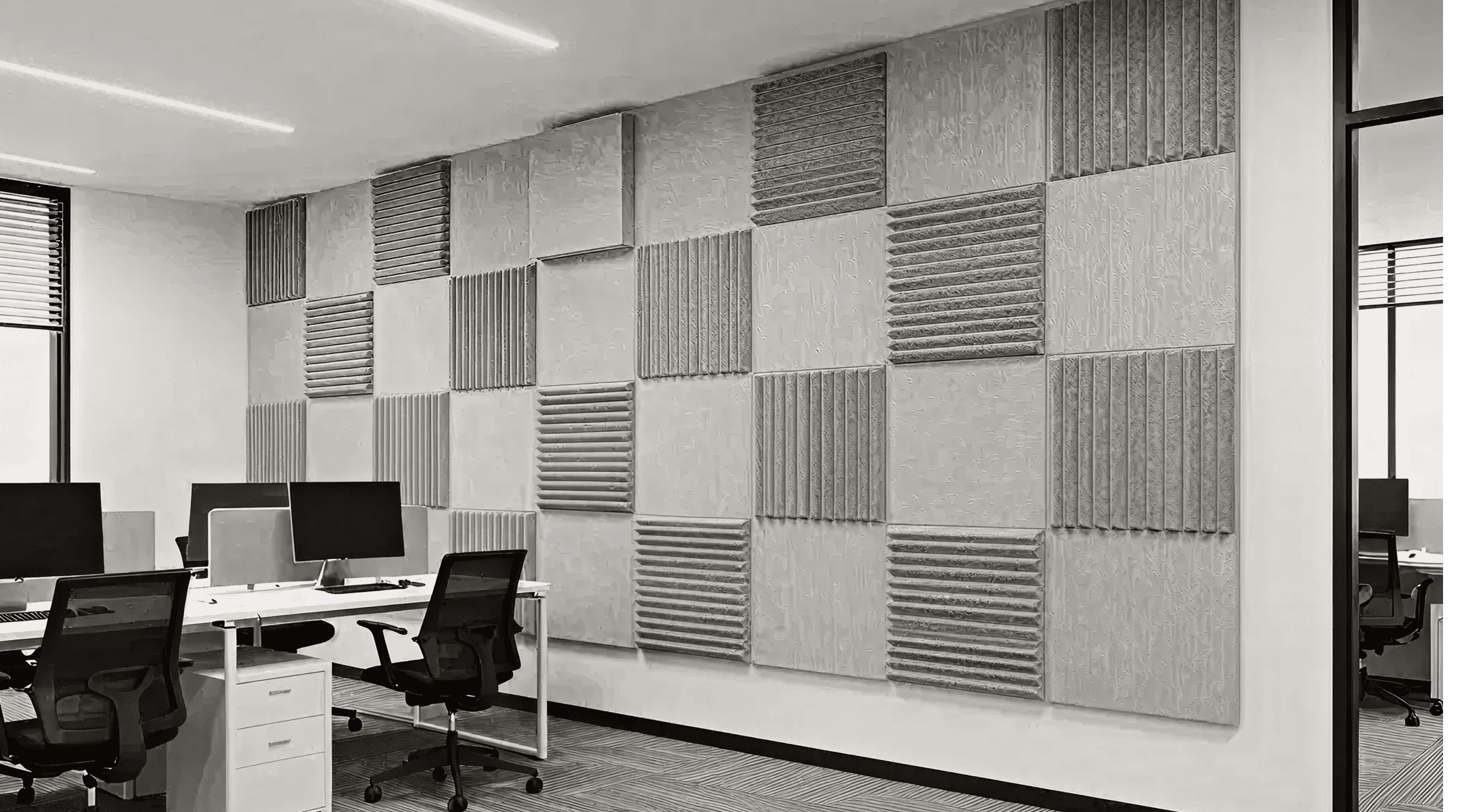
Acoustic wall and ceiling panels

single product icon

Fabric stretch acoustic systems

single product icon

Perforated wood panels

single product icon

Felt and PET acoustic materials

Each material is chosen according to:

single product icon

Sound absorption performance (NRC)

single product icon

Sound isolation requirements (STC)

single product icon

Architectural finish and detailing

single product icon

Long-term maintenance needs

no 04

Installation and On-Site Execution

Even the best acoustic design depends on accurate execution. Installation includes:

single product icon

Following approved acoustic drawings

single product icon

Precise placement and fixing of materials

single product icon

Treating joints, gaps, and acoustic weak points

single product icon

Coordination with architectural, mechanical, and electrical works

Proper installation is critical to achieving the intended acoustic performance.

no 05

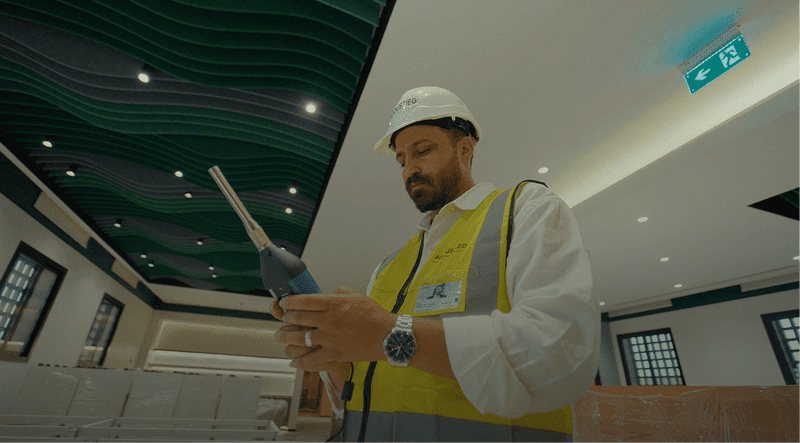
Testing and Performance Verification

After installation, acoustic performance is verified through:

single product icon

Reverberation time measurements

single product icon

Sound isolation testing

single product icon

Performance validation against design targets

single product icon

Fine-tuning where required

This step ensures the solution delivers measurable, real-world results.

Where Architectural

ACOUSTICS ARE APPLIED

Architectural acoustics play a vital role in many environments, including:

  • Corporate and administrative offices

  • Meeting and conference rooms

  • Theatres and auditoriums

  • Educational facilities

  • Healthcare environments

  • Hotels, retail, and commercial spaces


Verification typically includes:

  • Noise measurements before and after installation
  • Documentation of compliance
  • Long-term monitoring where required


Each space has unique acoustic requirements that must be addressed through tailored design.

Why Choose

ACOUSTIEG?

ACOUSTIEG approaches architectural acoustics as an integrated design discipline, combining engineering precision with architectural sensitivity. Key strengths include:

  • Detailed acoustic analysis from early design stages

  • Solutions aligned with architectural vision

  • Carefully selected, performance-driven materials

  • High-quality execution and installation

  • Post-installation testing and validation


ACOUSTIEG treats acoustics as a fundamental architectural element that shapes how spaces are experienced.

CONCLUSION

Architectural acoustics bridge the gap between visual design and functional performance. When addressed strategically from the earliest stages, they transform spaces into environments that are comfortable, efficient, and purpose-built.

With the expertise of ACOUSTIEG, acoustics become an integral part of architecture—designed, engineered, and executed to perform.

NEXT

Articles

This article explores building acoustics, the key standards that govern them, the most common challenges in real projects, and best practices for achieving reliable acoustic performance.
This article explains the role of acoustic solutions in healthcare environments and best practices for achieving a balance between regulatory compliance and acoustic comfort.
This article explores the importance of acoustic solutions for educational buildings and universities and compliant acoustic performance-highlighting the approach adopted by ACOUSTIEG.

All rights reserved to ACOUSTIEG © 2025

LOG IN TO
YOUR ACCOUNT

LOG IN

TO YOUR ACCOUNT

Access your dashboard, manage your projects, and explore our full services

Don’t have an account? Sign up