Product Factsheet &
TECHNICAL SPECIFICATIONS (ACOUSTIC LOUVERS)
Acoustic Sound-Attenuating Material
Ventilation / Intake & Exhaust Opening System
Louvered Ventilation Module / Customized
Frequency Absorption Focus
Airborne Noise Through Ventilation Openings
Noise Attenuation While Maintaining Airflow
HOW THE ACOUSTIC LOUVERS
WORKS
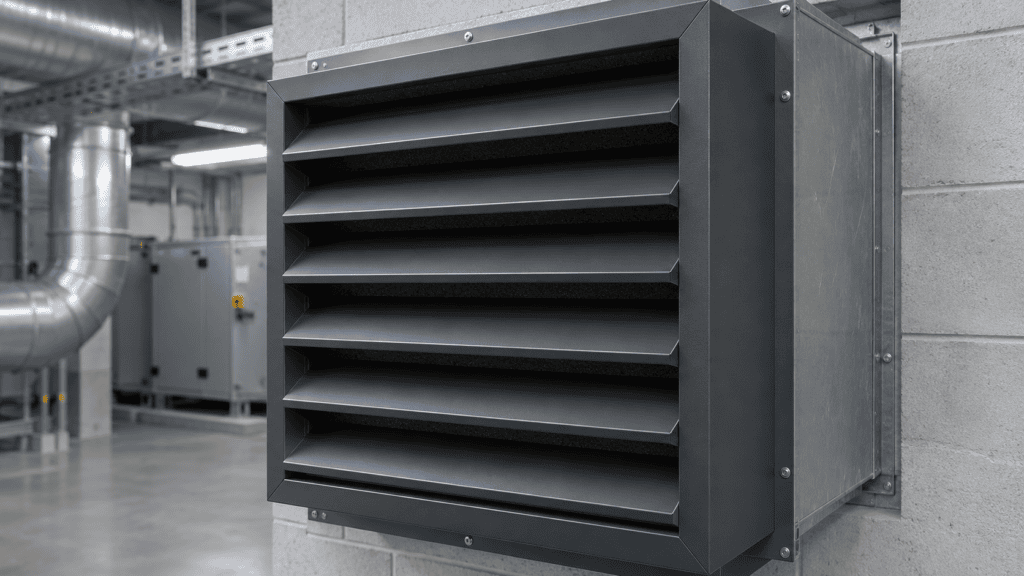
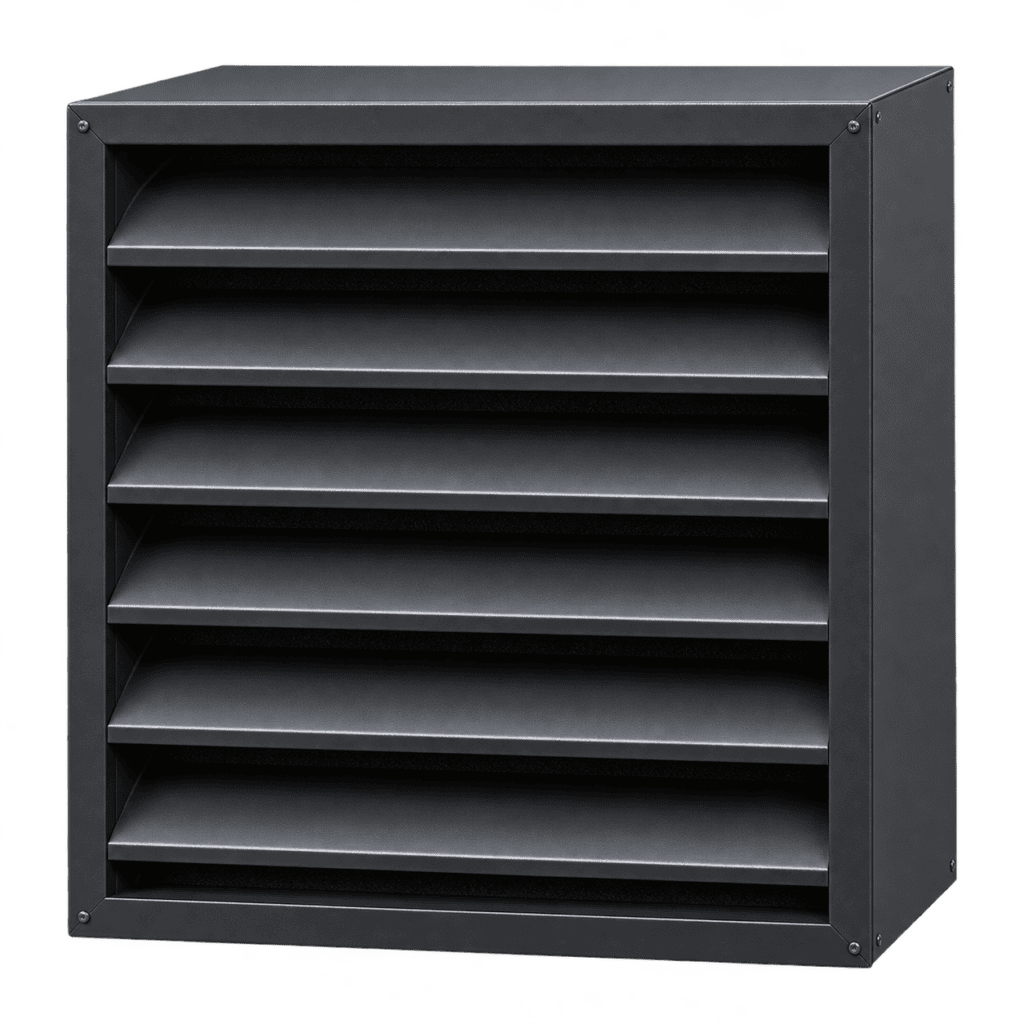
Acoustic Louvers work by combining an airflow path with sound-attenuating construction. Instead of leaving an open ventilation path through which noise can travel directly, the louver introduces an acoustically treated pathway that reduces sound transmission while allowing air to pass.
- Attenuates Airborne Noise: The internal acoustic construction helps reduce noise travelling through intake and exhaust openings.
- Maintains Airflow: The louver is designed to provide an acoustic barrier without completely blocking the ventilation path required by mechanical systems.
- Treats Difficult Service Paths: By treating ventilation openings, acoustic louvers help address one of the common weak points in otherwise sound-controlled mechanical rooms and enclosures.
Direct Answer:
SOUND INSULATION & NOISE CONTROL
Ventilation openings can create direct pathways for airborne noise to escape from mechanical rooms or enter adjacent occupied spaces. Acoustic Louvers address this pathway by introducing sound-attenuating construction into the ventilation opening.
Unlike conventional acoustic panels, which primarily control reflected sound inside a room, acoustic louvers are concerned with noise transmission through an opening. ACOUSTIEG specifically lists acoustic louvers for intake and exhaust openings as part of its noise-control approach for mechanical and utility rooms.
VS. SOUNDPROOFING
Sound absorption reduces reflected acoustic energy within an enclosed room, while Acoustic Louvers are used to reduce airborne noise transmission through ventilation openings.
For example, acoustic wall and ceiling panels can reduce reverberation inside a mechanical room, but an untreated ventilation opening can still provide a direct path for noise to escape. Combining internal acoustic treatment with properly designed acoustic louvers allows both room acoustics and ventilation-related noise transmission to be addressed.
Targeted
COMMERCIAL APPLICATIONS
● Corporate Workspaces: Mechanical rooms, HVAC areas, plant spaces, and service zones within office buildings where ventilation openings require acoustic treatment.
● Auditoriums & Educational Venues: Performance spaces, educational facilities, studios, and technical rooms where mechanical ventilation must operate without creating uncontrolled noise paths.
● Hospitality & Leisure: Hotels, entertainment venues, gyms, and leisure facilities where equipment and ventilation noise must be controlled near occupied spaces.
● Acoustic Suites: Recording studios, broadcast facilities, cinemas, home theaters, and other acoustically sensitive environments where ventilation openings require dedicated noise-control treatment.
Frequently Asked Questions
FAQ
What are Acoustic Louvers used for?
Acoustic Louvers are used at ventilation intake and exhaust openings to reduce airborne noise transmission while allowing air to flow through the ventilation system.
Are Acoustic Louvers the same as acoustic wall panels?
No. Acoustic wall panels primarily absorb reflected sound inside a room, while Acoustic Louvers treat ventilation openings and focus on reducing noise transmission through the airflow path.
Where are Acoustic Louvers commonly used?
They are particularly useful for mechanical and utility rooms, HVAC installations, equipment enclosures, and other areas where ventilation openings could otherwise become direct paths for noise transmission.
Turn Better Acoustics Into
BETTER SPACES WITH ACOUSTIEG
Effective mechanical-room noise control requires more than treating the walls and ceiling. Acoustic Louvers help address ventilation openings as part of the overall acoustic strategy, reducing noise leakage while allowing the airflow required for equipment and building systems.
Explore Acoustic Louvers • Request Engineering Consultation • acoustieg.com